
The month of January was a super high-signal month for the Creator Economy - globally and in Africa.
From the 1 Billion Followers Summit in Dubai to iShowSpeed’s 20-country Africa tour and Khaby Lame’s groundbreaking $975 million deal, creators grabbed headlines everywhere.
I also just came back from Lagos, where I partnered with the African Creators Summit to launch its Business Day, the first high-level gathering of African Creator Economy executives and professionals - getting all these minds in one room unearthed some new insights, which I’ll share with you here.
The African Creator Economy is growing up, and there’s much to talk about, so get reading 👀👇
In the space of four weeks, there’s been a shift in the way the Creator Economy is being perceived on the continent. At a mass awareness level, we can thank iShowSpeed for that.
For 28 days, you, me, and everybody were mesmerized by the capacity of a 21-year-old live YouTuber to single-handedly change the narrative about the continent for the better.
But what took place behind the screens this past month is equally fascinating.
Industry observers are converging on the same conclusion: globally, 2026 is the year the creator economy matures into a real industry. What we are seeing is an evolution toward an integrated ecosystem, where platforms, commerce, and creator-led ventures interlock operationally.
Here in Africa, we are observing the same trajectory, despite the usual challenges. Let’s explore what this means, concretely.
CREATOR ECONOMY VS CREATIVE INDUSTRIES, CREATOR VS CREATIVE
But first, a little bit of housekeeping. There’s too much confusion out there over terms, so an extra clarification won’t hurt.
Creator Economy: The ecosystem comprising platforms, tools, businesses and revenue models that allow individuals (”Creators”) to monetize an audience they directly reach online.
Creative Industries: The sectors that harness and showcase culture, creativity, and intellectual property to produce goods and services that generate economic growth, create employment, and project soft power. The Creator Economy is one sub-sector of the Creative Industries, alongside others such as film, music, fashion, design, gaming, visual arts, literature, live performance, and so on.
Creator: A person who builds and monetizes a direct relationship with an audience, primarily through digital platforms. Those used to be called “influencers”, but now a Creator can also be a trained lawyer, doctor, chef or podcaster whose main business is to create digital content around their expertise.
Creative: A person whose core skill is content, cultural or artistic production. A Creative can be a graphic or web designer, brand strategist, writer, singer, designer, filmmaker, etc, working either for themselves, for a creative enterprise, or for a non-creative enterprise (the automotive industry employs plenty of designers, for example).
Talent: Anyone with recognized ability within their industry. You can be a music talent or a marketing, engineering, or management talent, for example.
Brand: A repeatable commercial identity that audiences recognize, trust and are willing to pay for. A Creator, a Creative or a Talent can become a brand when they create this commercial identity that goes beyond themselves. For example, Nollywood star actress Omotola Ekeinde says that she has two identities: Omotola (who she is when she wakes up in the morning) and OmoSexy (her brand).
Things should be clear now. Let’s continue.
THE 4 KEY MOMENTS OF JANUARY 2026
1️⃣ The 1 Billion Followers Summit in Dubai
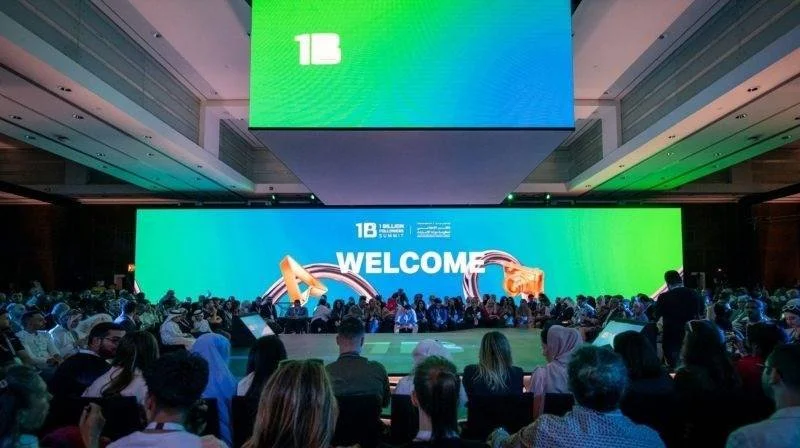
The 1 Billion Followers Summit in Dubai - January 2026
The 4th edition of the 1 Billion Followers Summit, which took place in early January in Dubai drew a record-breaking crowd of over 30,000 attendees, more than 15,000 creators and over 500 speakers with a combined reach of 3.5 billion followers.
What’s relevant to our conversation here is that Africa wasn’t tokenised. African creators were showcased among the speakers and had the opportunity to interact with the global creator ecosystem.
Until now African creators had been somewhat isolated, so their integration in such a high profile global event is instrumental for them to gain access to global tools, strategies, and other creators with whom to potentially collaborate.
2️⃣ iShowSpeed’s Africa tour
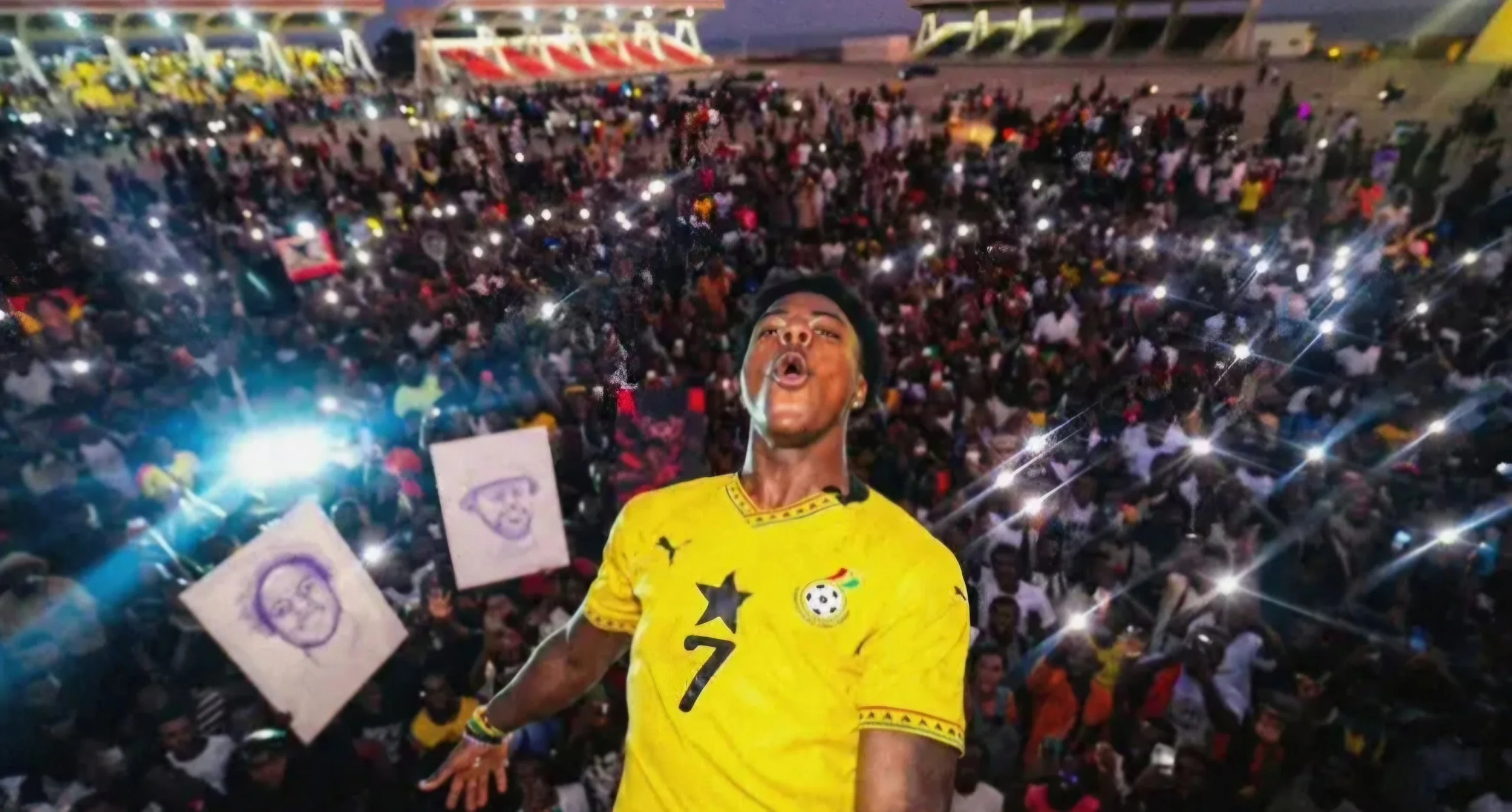
iShowSpeed somewhere in Africa - January 2026
There was no way to miss this - iShowSpeed’s Africa tour captured the African zeitgeist last month. The one we now call “Speed” for short (real name Darren Watkins Jr) is a YouTube-first live streamer whose distinctive skill is turning public space into real-time global spectacle. His content is unscripted, chaotic, often uncomfortable, and deliberately designed to generate clips at scale.
If, like me, you’re only discovering him now, you might not know that Speed has been causing a ruckus online for a while. He registered his YouTube channel at 11 years old in 2016, and first started gaining attention five years ago because of his over-the-top, sometimes violent verbal and physical reactions while gaming. He progressively built a massive fan base around football fandom, and then expanded aggressively into IRL content and travel. He’s not a choir boy. He has faced sanctions, ecosystem bans, public backlash and real-world security incidents due to his behavior, including being swatted live on stream.
Africa was not his first international tour. Speed has taken this format on the road before, including high-profile stints in Australia and New Zealand. What changed this time was not the content style, but the context. His mother is Ghanaian, and he framed parts of this trip as a form of return.
The decision to come to Africa was also strategic in that it allowed Speed to create especially unique content for his audience. Global coverage of Africa remains stubbornly narrow, so what Speed offered through his roaming, unscripted livestream showing daily chaotic but joyful life was counter-programming at scale.
Backed by travel company Expedia, the Africa tour was expansive: close to a month on the road, twenty countries, and a relentless pace designed to maximise contrast, crowds and symbolic moments. Morocco was the top-performing stream with 15 million views, followed by Ethiopia (11M), Algeria (10.3M), and Kenya (10M). But Benin, Ivory Coast and Ghana (that shea butter massage!) provided their own viral moments. The Lagos leg was the worst of all (that’s a story for another day), but Speed did cross the 50-million-subscriber mark on YouTube there, on the same day he turned 21.
Speed managed, almost single-handedly, to disrupt the default Western storyline about Africa. The continent suddenly appeared as a place that is modern, young, loud, colorful, and digitally fluent.
What this tour may unlock next is more interesting than the tour itself. The most immediate impact is likely to be a rise in culture-driven travel by American Gen Zs and diaspora-curious audiences.
More importantly, this episode may force African governments to recalibrate how they understand power in the digital age. Many will chase creators simply for visibility, but the more strategic ones may understand the benefits they can reap from investing in things like clear filming rules, predictable permitting, security coordination, visa facilitation and creator-friendly commercial frameworks.
3️⃣ Khaby Lame’s $975m deal
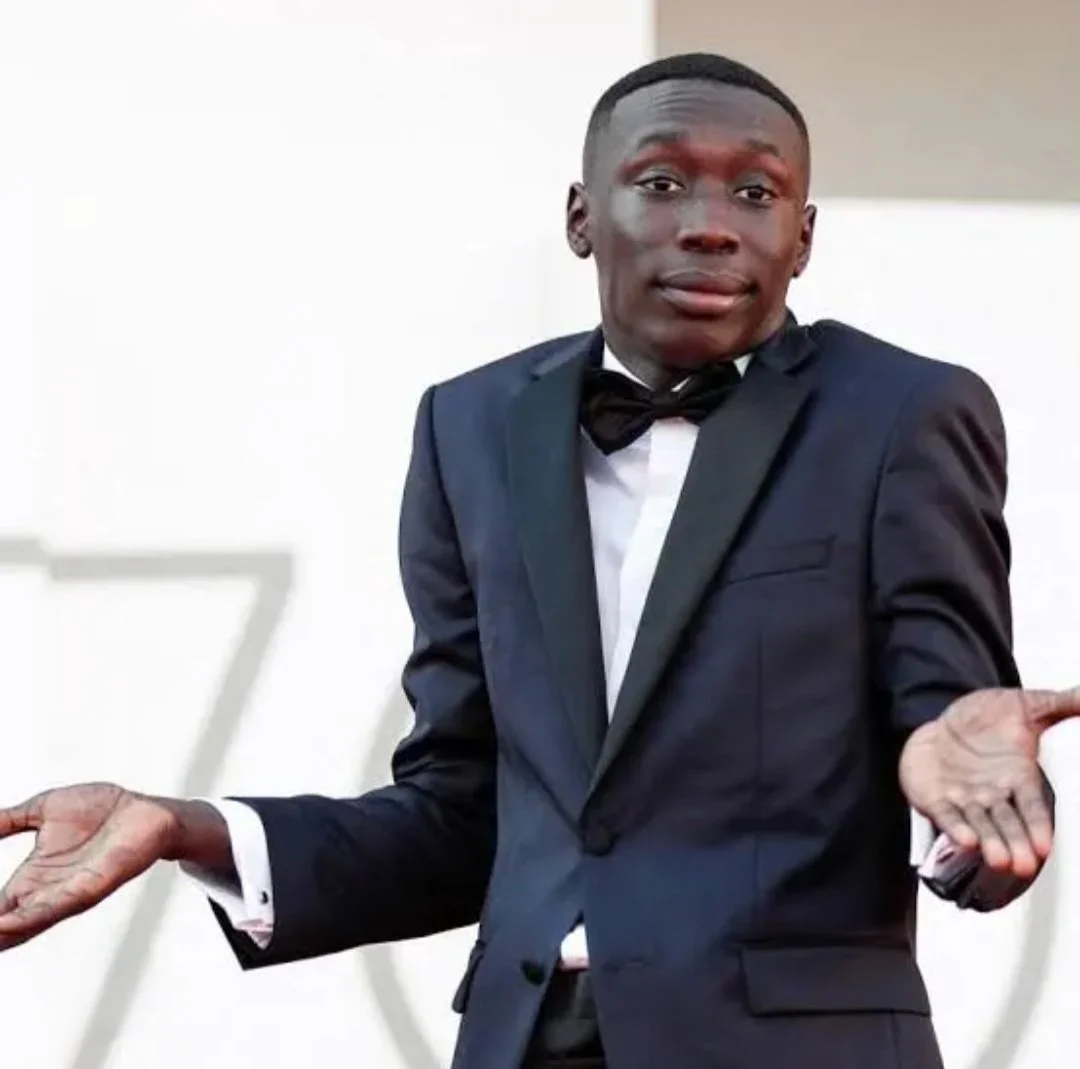
Khaby Lame
The other major news was the announcement that Senegalese-Italian Khaby Lame - the world’s biggest TikTok creator with 163 million followers - had sold his company for $975 million. This was NOT an exit, but a 360 deal with a Chinese MCN (Multi Channel Network), structured as an all-share acquisition through a US-listed entity called Rich Sparkle Holdings. This means that, despite the headline-grabbing number, no money changed hands and Khaby didn’t make a cent in cash.
What he got out of this deal is something else: his content, IP, image, style of humour, and even his digital AI twin will now be scaled and monetized industrially by a highly efficient Chinese machine. I wrote a Linkedin post about it which was widely read - if you haven’t seen it, catch up here.
Another very interesting point about the Khaby Lame deal is that his company never went through a classic US/EU venture pathway.
Even before the paper acquisition by Rich Sparkle Holdings, Khaby only owned 49% of his company Step Distinctive Limited (there would be more to say about these unfortunate company names).
Rich Sparkle is listed on the Nasdaq’s small-cap market, so its SEC listing is public. That’s how we can see that the other shareholders of Khaby’s company are neither big US VCs or talent agencies, nor a European media fund. Instead, Khaby’s business and financial partners are offshore holding entities tied to very discreet, mostly Chinese individuals.
It makes sense that the Chinese would have been the first to notice Khaby’s rise on TikTok and understood the global potential of his particular brand of silent comedy.
The creator economy is not insulated from the broader realignment of global trade and geopolitics.
US platforms and Hollywood no longer sit at the centre of gravity. Capital, infrastructure, and execution capacity are already shifting toward China and the Middle East, and the next wave of creator scale will be built there, not in the West.
4️⃣ The African Creators Summit in Lagos
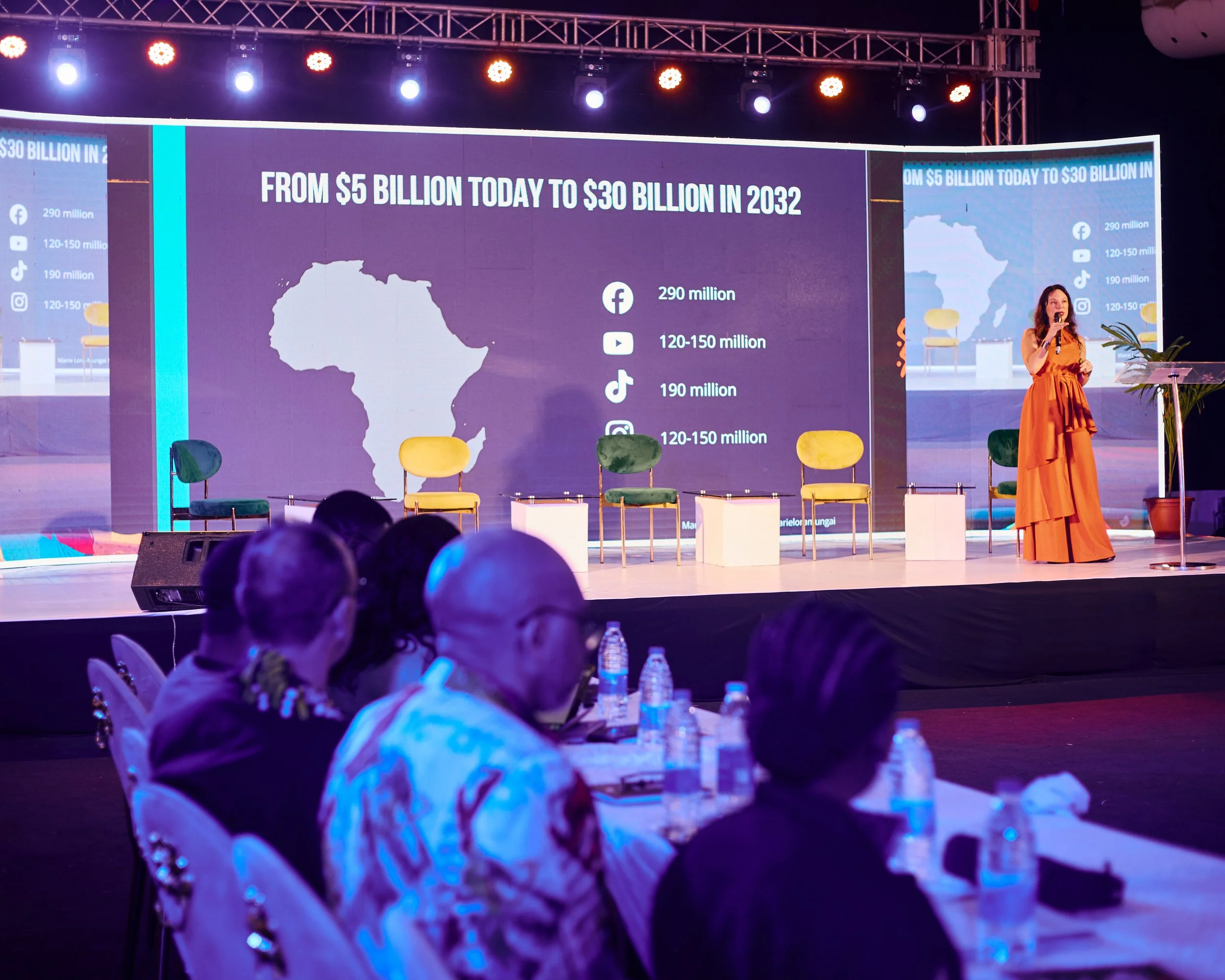
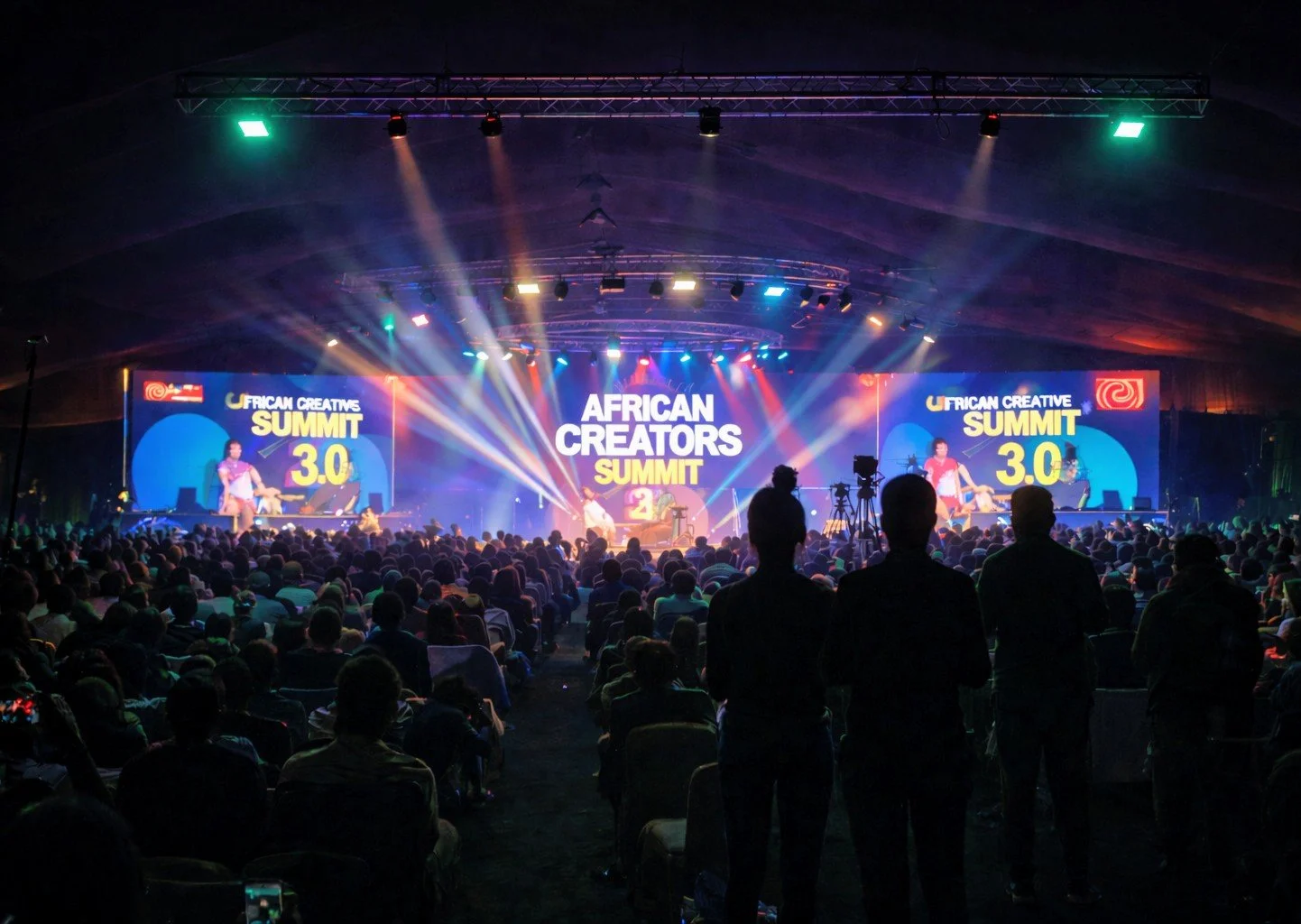
The African Creators Summit inaugural Business Day - January 30th, 2026 / Lagos, Nigeria
All these movements made for a perfect backdrop for the 3rd edition of the African Creators Summit, which drew 3,000+ attendees, most of them young creators, to its standing-room only main stage and its experiential space powered by Meta.
The Summit also set the stage for the release of the excellent new Africa Creator Economy Report by TM Global and David Adeleke ’s Communiqué.
I’ve been attending the Summit since its first edition, and this year I partnered with Oladapo Adewunmi at Apollo Endeavor Limited to launch ACS's inaugural Business Day, an invitation-only gathering of platform executives, top creators, entrepreneurs, investors, policymakers and ecosystem builders. The goal of the event was to validate the Creator Economy as a recognized sub-sector of Africa’s creative industries, quantify its contribution through fresh data, shared metrics, and case studies, and brainstorm practical solutions to boost its growth.
Weren’t there? No worries, here’s the gist 👇
THE AFRICAN CREATOR ECONOMY: HOW BIG CAN IT GO?
In my keynote, I focused on laying the path for the African Creator Economy’s next stage of growth.
As the global creator economy is moving from “influencer buzz” to a structured sector forecast to surpass $500 billion by 2027, Africa is following suit at remarkable speed. Valued at $5 billion in 2025, the continent’s creator economy is projected to hit close to $30 billion by 2032. The maths behind these big numbers is often wobbly, but what you should pay attention to is the pace.
African audiences are already substantial in the platforms: the number of registered accounts are close to 300 million on Facebook, 200 million on YouTube, 190 million on TikTok, and 150 million on Instagram.
There’s no precise estimate of the number of African content creators, but it’s likely in the tens of millions. We talked about iShowSpeed and Khaby Lame who, despite their African heritage, cannot be considered African creators. But Africa has its stars too.
Mark Angel (one of the Business Day’s speakers) is the OG of African skit-makers. He built one of the continent’s earliest and most successful YouTube-native comedy franchises long before the “creator economy” had a name, making millions - in USD! - from his massive Facebook and YouTube audiences.
Ruth Kadiri and Omoni Oboli are the Nollywood queens of YouTube. Ruth has built a YouTube-first model with over 2.5 million subscribers, while Omoni Oboli was first a traditional movie star who then launched her own digital studio, releasing full-length films directly to YouTube. Her channel has close to 2 million subscribers, and her films routinely reach tens of millions of views. Her biggest hit, Love in Every Word, has 31 million views, for example.
Then we have Wode Maya (Ghana) and Tayo Aina (Nigeria), both long-form travel and business creators with over 1 million YouTube subscribers each. They are some of the most internationally recognised African creator voices.
In a completely different category, Algeria’s Oum Walid runs one of the world’s largest creator businesses on YouTube with over 14 million subscribers. Her practical, mass-market cooking content has another particularity - she never shows her face.
These are just a few examples of some African superstars. They are the outliers. They make hundreds of thousands, and in some cases million, through content creation.
But today you can find thousands of creators across the continent making a living through various types of content: comedy, film, cooking, business, travel, tech, beauty and lifestyle -- even if the majority (about six in ten according to the Africa Creator Economy report) still earn less than $100 per month from their creative work.
Things are moving fast. However, while talent may be evenly distributed, markets are not. When it comes to converting reach into revenue, African creators face serious structural handicaps.
The first one is monetization.
According, again, to the Creator Economy Report, creators across the continent generate income through a mix of brand partnerships, platform payouts, and self-owned ventures.
Over the past five years, the number of brands working directly with African creators has increased significantly. We have seen the rise of influencer marketing, alongside the emergence of businesses that help creators manage these opportunities, such as startups Wowzi and Trenderz, who both presented at the event. But the advertising landscape in Africa is still limited. Finding ways to increase the pool of brands working with creators is both a challenge and an opportunity.
A growing number of creators are also selling products and services, whether physical merchandise (typically for beauty or lifestyle creators) or digital products such as ebooks, online courses, and templates. One would imagine that this revenue stream would be severely constricted by African consumers’ low purchasing power, however, Selar has made a compelling business case for this segment of the creator economy. In fact, as COO Seyi William-Ogunbiyi announced during the ACS Business Day, Selar is on track to disburse a staggering N30 billion (that’s $21 million!) to creators in 2026.
It turns out that, as the Creator Economy report confirms, Africans are more ready to pay for products that have a direct utility, such as learning new skills or self-improvement, and this is where Selar thrives.
Interestingly, platform payouts are only the primary source of income for 5.8% of creators, still according to the report. This is one of the core constraints of the African creator ecosystem: what is the most structured monetization channel elsewhere in the world remains severely limited on the continent.
Indeed, only Facebook and YouTube currently operate revenue-sharing programmes in Africa. As it has been widely reported, African creators typically earn under $1 per 1,000 views, compared to $3–10 in the United States or Europe, because of the shallow African advertising pool. Platforms have democratised visibility but not financial opportunity at the same pace.
As a result of these monetization challenges, creator incomes remain volatile, fragile, and overly dependent on platform algorithms.
The second challenge is the well-known issue of piracy and the lack of copyright infrastructure, which means that content is easy to steal, hard to license, and even harder to collect on. In practice, it means that social content gets reposted, clipped, and republished without permission, with few workable routes to license or enforce rights at scale. As a result, creators struggle to turn social media IP into reliably monetizable, investable assets. At the event, we heard from Makerverse, a South African startup who developed a solution for the music labels and artists to efficiently register, track, distribute and monetize their content.
The third challenge is inconsistent regulation, which sometimes helps, but more often causes friction.
On one hand, governments are legitimate regulators, such as when they enforce consumer and data rules. Nigeria fined Meta $220 million over consumer/data-related findings, for example.
But over or badly timed regulation can quickly become a brake on growth. Kenya for example has steadily expanded taxation and compliance around the digital economy. The country’s new tax law has had real-life impact: last year, streaming platform Twitch decided to suspend monetization in Kenya, because the new regulations were too heavy for their business there.
Governments also sometimes intervene about the content being shared itself. Last month in Ethiopia, police arrested multiple TikTok creators linked to outfits worn at the Ethiopia Creative Awards, citing “public morality.”
These events are quite unfortunate, because governments have the power to become major enablers of the creator economy. They can use their influence to advocate for the platforms to switch monetisation on, they can help reduce payout friction, and they can force fairer platform terms. They can also support the development of infrastructure, such as creator hubs.
One of the best examples of this comes, ironically, also from Kenya, where the government announced that it would allocate 10% of its public communications budget to digital creators campaigns. Wowzi was one of the biggest proponents of the idea.
Finally, the last structural constraint to the growth of the African creator economy is that too many African creators are expected to run businesses without the skills or teams required to do so. Most creators come into the ecosystem through talent and audience growth, not through training in finance, contracts, IP management, pricing, or long-term strategy. As a result, reach scales faster than structure, and creators are not currently presenting as investable businesses.
In fact, leading investors Walter Baddoo (4DX Ventures) and Iyinoluwa Aboyeji (Future Africa) explained at the event that institutional investors are not looking to back individual creators but structured businesses built AROUND the creator economy (such as marketplaces, distribution and rights infrastructure, tech or financing tools for creators). The four startups that presented at the event - Selar, Wowzi, Trenderz and Makerverse - provided concrete examples of what investor-backable creator economy companies look like.
I’ve been bullish about the creator economy for several years now. It is a sector where African talents, not just in terms of creation but also in tech, can shine. There’s potential for African creators to become global talents as well.
The challenges and hurdles are clearly identified, and all of them have practical solutions. We, collectively, just need the will to implement them.
OTHER KEY INSIGHTS FROM THE ACS BUSINESS DAY
Our speakers dropped gems throughout the day, here are the few that struck me the most:
1️⃣ Africa urgently needs a creators’ association
On the Policy panel, a spirited debate between Ojoma Ochai, CC-Hub CEO, Baba Agba, SA to the Minister of Arts, Culture, Tourism and the Creative Economy, and Isioma Nnenna Alexis Idigbe, Head of Media, Entertainment and IP Law at Punuka Attorneys led to this conclusion:
It is now time for Africa’s creators to self-organize and self-regulate through a responsible industry body that can engage platforms, governments and communities.
2️⃣ Turning into followers into fans
This insight was offered to us by Nile’s CEO Moses Babatope: in order to scale, creators need to learn how to turn (free) followers into fans that are ready to consume whatever they have to offer beyond the platforms. Nollywood made this transition when it convinced what used to be an audience of pirated VCDs to come to the cinemas.
3️⃣ Investor-backable models are emerging
As I mentioned earlier, institutional investors won’t back individual creators (until a local Khaby Lame emerges), but they’ll back businesses built around the creator economy - in many cases those are solutions that see creators as customers rather than as the product. Backable models include: aggregators, marketplaces, distribution and rights infrastructure, tools and services for creators, and financing solutions (fintech/creator banks).
4️⃣ The creator economy is merging with everything else
Earlier I said that the Creator economy was a subsector of the Creative Industries. In our last panel of the day, we heard from professionals in the fields of Fashion (Ifeanyi Nwune), Music (Chioma Frances “Ohrma” Okoro), Media (James Torvaney (ACA)) and Film (Moses Babatope) about how the creator economy intersects with their own business. What is becoming clear is that the creator economy is morphing from a vertical into a horizontal layer across the creative industries. And any creative business that ignores it will ultimately lose relevance.
We plan to hold more such Creator Economy events over the course of the year. Want to be part of the conversation? Send me a message to let me know.