
The new edition of HUSTLE & FLOW is out!
💫 In May, African creatives took center stage at the Africa Forward Summit in Nairobi, the Africa CEO Forum in Kigali, the Cannes Film Festival, and during the Africa Day celebrations.
😶 May was also the month I went viral. Needless to say, that last point was not on my bingo card for 2026 - or ever.
In this edition, I talk about African cinema’s groundbreaking successes at Cannes, Afrobeats and Nollywood's cooling relationship, the latest in the global repatriation movement of looted African artifacts, new investments in Sports and Entertainment infrastructure, one of Africa’s largest financial institutions boarding the creative industries bandwagon, and more.
Click to read 👇 👀
🎤 So yes, I went viral this month when President Macron commandeered my mic at the Africa Forward Summit in Nairobi.
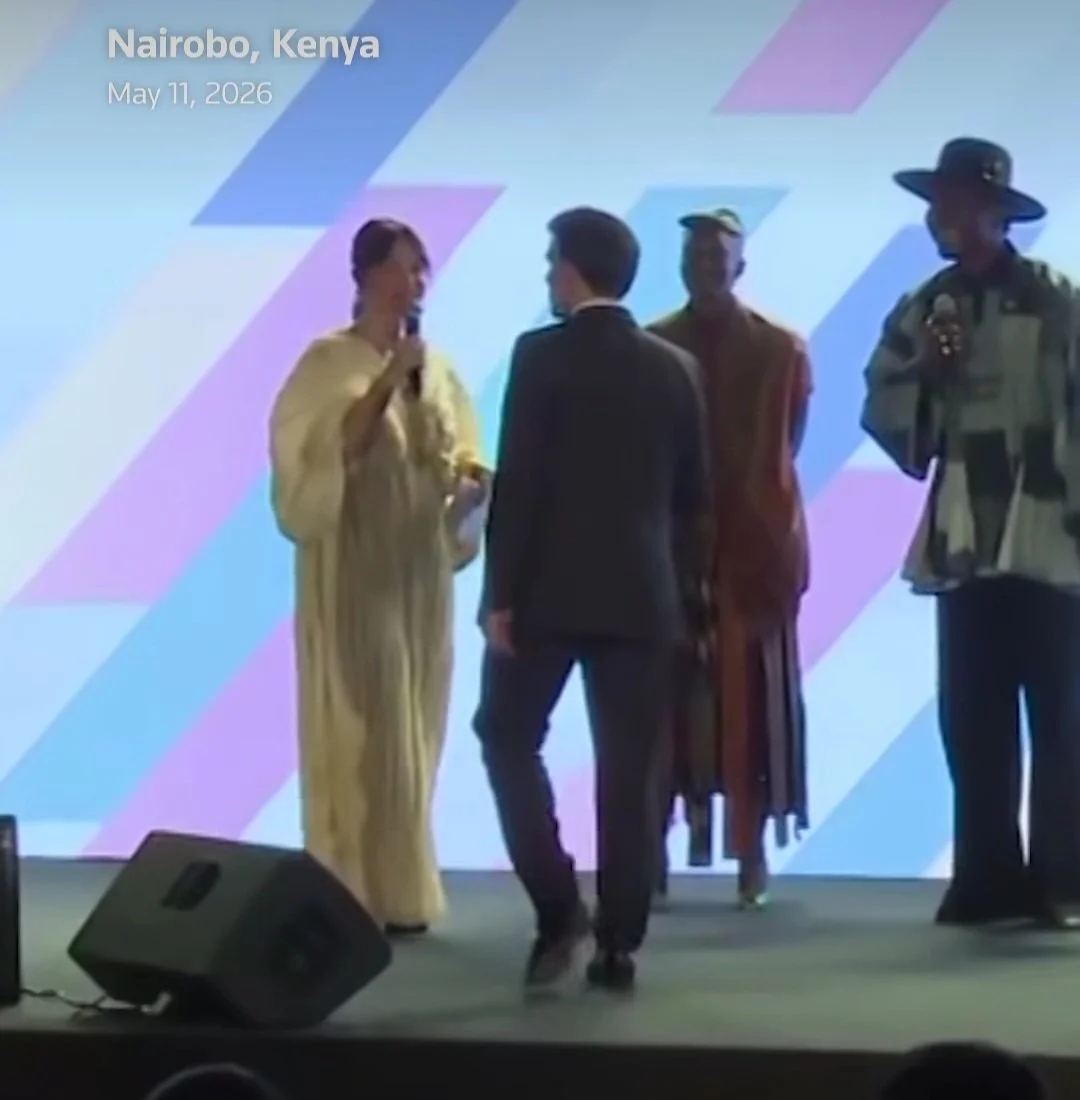
It was much ado about nothing really, so I won’t go back over it, but ICYMI (in case you missed it) and feel excluded, here’s:
My post about what really happened in the room
One particularly successful meme (wait for me in the background vocals)
My interview about the whole wahala on Monocle radio
Alright, that’s enough, let’s get back to business.
AFRICA DAY
🌍 This year, Africa Day came with a campaign attached.
Opportunity Africa, a pan-African movement convened by Africa No Filter, Brand Africa, and partners including the African Union, launched #NotWaiting, calling on Africans across the continent and diaspora to spotlight the people, ideas, businesses and progress already shaping Africa's future.
🗓 The campaign will repeat on the 25th of every month, creating a recurring moment for collective, positive self-representation online.
This follows the March launch of the Opportunity Africa Creative Council, a continental platform bringing together senior creative leaders and designed to reshape how Africa is perceived globally and how it defines itself.
The initiative is well-intentioned, well-organized, and the people behind it are serious. Moky Makura’s Africa No Filter has done an impressive job at documenting the economic consequences of how Africa is seen externally, and at shifting this narrative.
Hopefully, this campaign will be successful at amplifying what is already happening on the ground: the fact that African creative professionals are now building products that are undeniably first-rate and naturally force the world's attention.
FILM
One great example of that is African filmmakers’ success last month at Cannes, the world’s most glamorous film festival.
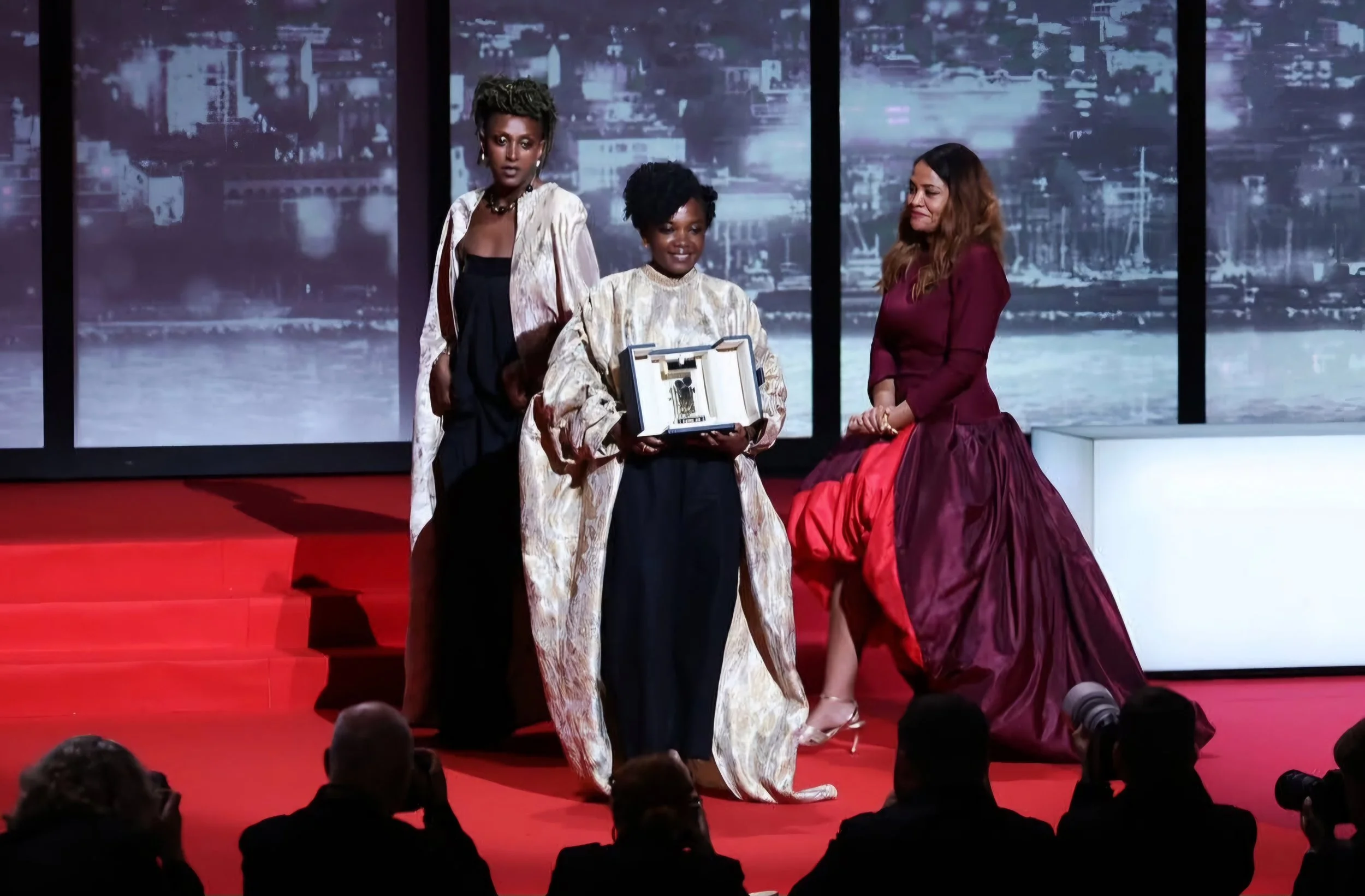
🏆 First, Marie-Clémentine Dusabejambo became the first Rwandan director to screen in the Cannes Official Selection.
Her film Ben'Imana not only received a standing ovation, but it went on to win the Caméra d'Or, the festival's prestigious award for best debut feature across all sections, plus the FIPRESCI Critics' Prize as a cherry-on-top.
Ben'Imana, set in 2012 Rwanda against the backdrop of the Gacaca community justice process, follows a genocide survivor whose capacity for forgiveness is pushed to its limits when her teenage daughter becomes pregnant.
🕙 Ben'Imana took ten years to make.
It passed through La Fabrique Cinéma at Cannes, the Atlas Workshops at the Marrakech Film Festival, the Ouaga Film Lab, and the Berlinale World Cinema Fund, before a single frame was shot.
It received post-production support from the Norwegian Sørfond and won the Red Sea Souk Post-Production Award at the Red Sea Film Festival.
As is typical for festival films, Ben'Imana was built the long and painstaking way through the global development lab circuit, one residency and one grant at a time.
🛠 What is a lot less typical is Ben'Imana’s financing architecture.
The mechanics of international film productions often mean that the IP of African films end up owned by the European countries that financed them.
💪🏾 But the team behind Ben'Imana, led by Ejo Cine (Rwanda) and Princesse M Productions (Gabon), managed to keep majority ownership on the continent, thanks largely to the support from Rwanda's new state-backed Film Fund - one of the first titles to benefit from it.
In the enigmatic world of auteur cinema, this is big, ground-shifting, and a decisive argument in favor of African film funds.
The film will be distributed by Paris-based MK2 films (who, hopefully, will not forget African audiences?).
🎬 Another Cannes winner was Nigerian cinema as a whole.
To those who dismissed Nigerian cinema as only capable of Nollywood-style hyperbole (nothing wrong with that by the way - those filmmakers laughed all the way to the bank), I’ve always said that once Nigerian filmmakers cracked the auteur world, they would dominate.
Well, it’s happening now.
In Cannes, two things happened:
🙌 👏 First, the Esiri brothers' Clarissa (Virginia Woolf's Mrs Dalloway transposed to Lagos, shot on 35mm) received a standing ovation at its Directors' Fortnight premiere.
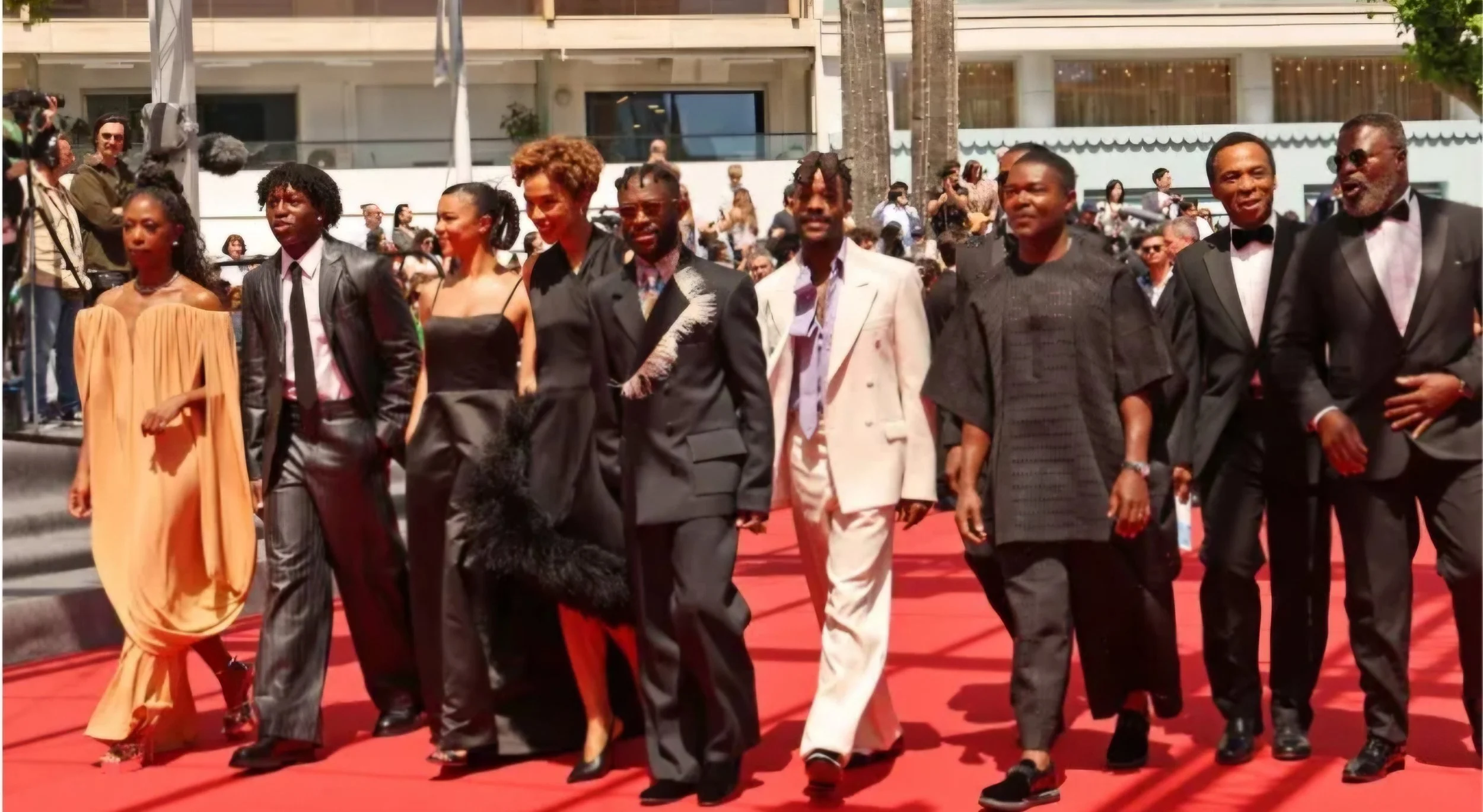
Afrexim’s CCInc (Osahon Akpata) financed the film, whose cast includes Sophie Okonedo, David Oyelowo, and Ayo Edebiri. Critics are calling it a breakout, and indie distributor darling Neon has the world rights.
🤝 At the same time, across town at the Film Market, Seoul-based Flix Oven announced CJ Obasi (Mami Wata, Nigeria's Oscar submission) as the inaugural fellow of a new African-Korean filmmaker residency.
CJ will go to Seoul for a month to develop his new feature, with Morgan Freeman exec producing. Continental Entertainment's and former CAA Head of Africa Ozi Menakaya structured the deal.
🏆 This comes the year after Akinola Davies Jr.'s My Father's Shadow (the first Nigerian film in Un Certain Regard) earned a Special Mention for the Caméra d'Or at Cannes.
Three different pathways to global festival cinema that, beyond artistic vision, share some structural similarities (also present in the Ben'Imana success story):
🔹 African financing - finally
🔹 Proper time spent on development
🔹 Knowledgeable representation
🔹 Co-productions that make sense
🔹 Distribution deals negotiated before a film premieres
🔹 Reps, sales agents, and distributors who understand how to position African auteur talent for the global market
Nollywood built one of the world's largest film industries on volume, speed, and cultural relevance. That story isn't going away.
But a parallel track is forming, and it will expand the definition of Nigerian cinema.
FASHION
👗 If you've been following Nigerian fashion's export moment - the viral BBC story about the prom dresses shipped to Florida, the pop-ups selling out in London and Atlanta - you've been watching the demand side of a story that has barely started building its supply chain.
🏭 Nigeria's fashion has always had a structural problem hiding behind the headlines: the lack of local production infrastructure that pushes many designers to manufacture abroad.
That gap got a little smaller last month, when the Kwara Garment Factory signed a management and operations agreement with KWS Garment Production Village, handing over the running of one of Nigeria's most advanced industrial apparel manufacturing facilities to a private operator.
This would be an obtuse story if the private operator wasn’t Folake Akindele, founder of Tiffany Amber, one of the most internationally recognized African fashion brands of the past three decades, and someone who herself has spent much of her career manufacturing outside Nigeria.
👨🏿🌾 The unfortunate reality holding African fashion back is this: the continent produces roughly 6% of the world's total cotton supply, yet 90% of that raw cotton is exported for processing elsewhere.
The current situation in Nigeria is that the country grows the fibre, exports it, and then buys it back as fabric.
Nigerian designers may create samples locally, but the bigger brands often work with Chinese or Turkish factories to produce pieces at scale, sometimes reimport the finished garments, before finally selling them to customers in Lagos or London.
Every step of that chain that happens outside Nigeria is value that does not come home. The Kwara factory, if it delivers on its ambition, starts to shorten that chain.
The thing is, the Kwara Garment Factory has existed on paper and in partial operation for several years.
🤞🏾 The hope is that a private operator like Akindele will be able to deliver on its promise, which is to employ up to 4,000 workers across its production ecosystem, extend beyond garment production into textile manufacturing, and leverage the still-elusive AfCFTA to reach continental scale.
The history of state-owned industrial facilities in Nigeria being handed to private operators is a mixed one, to put it diplomatically. There will be a lot of pressure on Akindele to make it work.
But if she succeeds, it will be transformative.
The Kwara factory is not Nigeria’s only large-scale garment manufacturing investment.
🤯 In July 2025, Ogun State and ARISE IIP announced a $2 billion garment manufacturing hub within the Industrial Platform Remo Free Zone - a project of an entirely different order of magnitude, with projected capacity of 4.4 million garments daily and between 120,000 and 150,000 direct and indirect jobs.
The Ogun project is backed by Afreximbank and modelled on ARISE IIP's proven and state-of-the-art Glo-Djigbé Industrial Zone in Benin, which already produces garments for Kiabi, Gémo, and U.S. Polo Assn.
It is good to see Nigeria making multiple, serious bets on rebuilding its garment manufacturing base. The execution, as always, is the variable worth watching.
HERITAGE
Back to that infamous moment on stage at the Africa Forward Summit in Nairobi.
📃 What got drowned under the internet buzz was the real reason why President Macron was participating in the Creation in Motion session I was MCing: to announce that France had passed a landmark framework law on the restitution of African cultural heritage.
The law, approved unanimously by both the French National Assembly and Senate, is significant, and in many ways even symbolic.
Until now, every single restitution required its own specific act of Parliament, a procedure so slow and cumbersome that in the nine years since Macron's 2017 Ouagadougou speech promising to return looted African artefacts, only a handful of objects had actually made it home.
🥁 The new framework removes that bottleneck: restitutions can now be authorized by government decree, without a parliamentary vote for each case. Already this year, Côte d'Ivoire received the sacred talking drum Djidji Ayokwe, seized in 1916.
The French law does not exist in a vacuum. The global movement towards repatriation of looted African artifacts has been steadily building over the past 10 years.
📦 The Netherlands sent back 119 Benin Bronzes to Nigeria in June 2025, while Germany has transferred dozens more. Cambridge University also transferred ownership of 116 Benin Bronzes to Nigeria in February 2026. Ghana received 130 gold and bronze artefacts from the UK and South Africa in November 2025. (The British Museum is still holding out).
Critically, African countries are also building the infrastructure to receive these objects: Nigeria's Edo Museum of West African Art (EMOWAA), designed by David Adjaye, is now open. Ghana is developing a Pan-African Heritage Museum near Cape Coast Castle, and Benin's new Quartier Culturel et Créatif in Cotonou includes dedicated gallery and studio space.
MUSIC
🎵 🎥 Two of Nigeria's biggest cultural exports - Nollywood and Afrobeats - are no longer on speaking terms. At least not for free.
Filmmaker and video director Dami Twitch set off a wave of industry conversation with a candid observation on the Afropolitan podcast: Nollywood producers can no longer use popular Afrobeats songs in their films without formal licensing clearance, and most of them simply cannot afford what that now costs.
The collaboration between the two industries, he added, is now "at a very weird place."
Why? Because top Afrobeats artists like Davido, Rema, Tems, Asake or Adekunle Gold have now been signed by global majors (UMG/Mavin/Def Jam, Warner, Sony/Columbia/RCA, Empire, etc) in sophisticated, legally binding agreements that transfer control over an artist's music catalogue, publishing rights, and sync licensing decisions to companies headquartered in London, New York, or Los Angeles.
Under these deals, the artist cannot unilaterally grant permission for their music to be used in a film anymore, even if they personally want to.
📝 The rights holder (the label or publisher) must approve the license, set the fee, and execute the contract.
For a Nollywood independent filmmaker operating on a tight budget in a currency that has lost most of its value against the dollar, that fee is frequently prohibitive.
But here’s the thing. It’s a problem, but it’s also progress.
The fact that Afrobeats songs are now commercially valuable enough to require formal sync licensing is the sign of a maturing industry.
💸 For years, the complaint from artists and rights advocates on this continent was precisely the opposite: that African music was being used everywhere without compensation, without credit, and without legal consequence.
The problem is not that the rights of the artists are now protected, but the mismatch in scale between a globalized music rights system and a film industry that is still predominantly local and naira-denominated.
What Nollywood is now experiencing is a version of what Hollywood deals with routinely (the sync licensing process) but without the infrastructure that makes it manageable.
Hollywood productions have music supervisors, legal teams, and pre-negotiated blanket deals with publishers. Nollywood independents have WhatsApp and a phone call to a friend.
The solution will eventually come from building the Nigerian equivalent of what works elsewhere: a centralized, transparent sync licensing registry where filmmakers can quickly find out who controls what rights, what it costs, and how to pay, in naira, with a clear process, at rates calibrated to production budget levels.
SPORTS
⚽️ I’ll go ahead and say it: the biggest investment opportunity in the African creative industries right now - in terms of transaction size and volume - is Sports and Entertainment infrastructure
Kigali's BK arena
With African sports and music booming globally, the lack of venues, districts, and ecosystems capable of capturing that value on the continent is the obvious gap.
🏗 Concretely, this means arenas, stadiums and other mix-use venues of varying sizes that can host sports events, concerts, performances, festivals, or conferences - and provide the anchor for additional revenue streams from tourism, hospitality, retail, and media.
But now, Big Money is finally going after that gap:
🔹 In July 2025, IFC and Proparco made a $50M bet on Helios Sports and Entertainment Group, which has infrastructure at the core of its strategy
🔹 In January 2026, Premier Invest announced the launch of the African Sports and Infrastructure Fund (ASIF), an open-ended fund designed to provide equity financing for ten multipurpose arenas across key African cities
🔹 The Lagos Arena, a $100 million, 12,000-capacity venue financed as a Public-Private Partnership, seems back on track after a 2-year delay
🔹 Morocco is deploying a multi-billion investment roadmap in stadiums and supporting infrastructure ahead of the 2030 World Cup, including the Grand Stade Hassan II in Casablanca, the world’s largest football stadium with 115,000 seats
The latest move happened 10 days ago at the Africa CEO Forum:
🤝 IFC and Masai Ujiri’s Zaria Group announced their partnership (aka, investment by IFC in Zaria Group) to develop sports and entertainment districts across major African cities including Nairobi, Lagos and Johannesburg.
Zaria Group has emerged as a leading player in sports infrastructure, with the BK Arena, Amahoro Stadium, and the $26M mixed-use Zaria Court in Kigali under its belt.
For too long, sports in Africa had only been seen through the lens of “social development” (and it is still seen that way by many). This attitude has kept the physical infrastructure under-invested for decades.
But this perception is slowly changing.
💡 The reality is, sports and entertainment venues should be treated like ports and airports -- as essential, revenue-generating, and nation-building infrastructure.
The challenges, however, are real:
Construction and operating costs for this kind of infrastructure are heavy, and in Africa, ticket sales, sponsorship, and media rights alone do not cover them yet.
To make the economics work, you have to layer in government incentives (land contributions, tax rebates, PPP structures), hospitality anchors (hotels, food, tourism attractions), retail and commercial tenants, and aggressive space rental strategies to maximise utilisation between events.
Getting that revenue mix right, and rebalancing it as the market matures, is where these projects succeed or fail.
As with many worthwhile endeavors, investing in sports and entertainment infrastructure is complex, difficult, and implies the ability to focus on the long-term rather than on quick turn-arounds.
FINANCING
💰 For years, we’ve complained that banks don't understand creatives, and creatives don't understand banks.
In May, one of Africa's largest financial institutions decided, very publicly, to do something about that.
At the (now infamous) Africa Forward Summit in Nairobi, Equity Group CEO Dr. James Mwangi highlighted how the bank is restructuring the way it works with creatives by developing tailored financial solutions that support long-term growth.
Three days later, at the Africa CEO Forum in Kigali, the bank backed those words with a formal commitment.
🤝 Equity Group and IFC signed an MOU explicitly naming the creative sector as one of three strategic pillars, alongside agriculture and MSMEs, under a framework Mwangi labelled the Africa Creative Economy Transformation Agenda, or ACETA.
An MOU between Africa's largest bank by footprint and the IFC (providing financing and guarantees), with a named agenda, shows that the commitment has moved from a simple idea to a structured initiative with accountability attached.
This comes after a similar partnership announced last December between HEVA Fund and NCBA Bank to launch bespoke creative financing products (event financing, invoice discounting, LPO financing, working capital), built directly around how creative businesses actually generate and spend money.
These moves are very exciting for a creative finance nerd such as myself because bank loans can help unlock growth in the creative industries at a much wider scale than VC, simply because they are much better adapted to the large majority of creative sector companies, which are profitable SMEs (and not high-growth tech startups).
📊 The HEVA-NCBA model in Kenya, now almost six months old, will start producing data soon on uptake, default rates, and whether the products are actually reaching the creatives they were designed for.
It will serve as important guidance for Equity Group, and no doubt for all the other banks that will soon join the creative industries financing bandwagon.
CREATIVE CASH FLOW
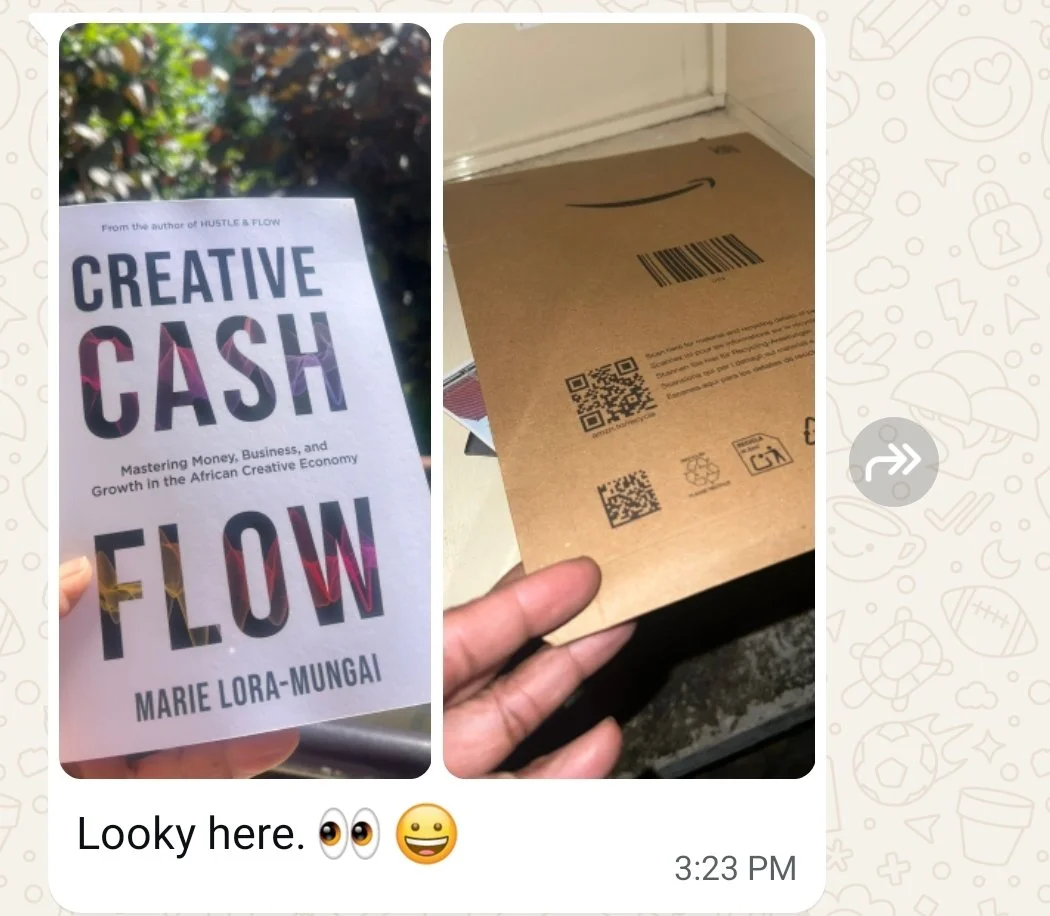
📖 It’s been a little over a month since the release of my book CREATIVE CASH FLOW, and it is steadily making its way around the world. Thanks everyone for your warm support!
At the book’s Nairobi launch event, I asked the audience one question: Do you identify the most as an artist, a founder, or a CEO?
This is also the first question I ask of the readers in the first Chapter.
Why?
🗑 Many training programs have wasted time and money trying to turn pure creatives into CEOs.
My view is that it is not always (not often) possible - and this shouldn’t be a problem. It’s just a fact.
🧑🏾🎨The skills that make someone a brilliant artist are not the same skills that define an effective operator.
And what makes a great founder - the hustle, the storytelling, the ability to launch from nothing - is not what a business needs at growth stage.
In the book, I argue that the first step you should take in your journey to build a sustainable creative business is one of self-reflection.
Being wrong about who you truly are and how it shapes your approach to business is one of the most expensive mistakes you can make.
So, who are you, really?
I built a fun quiz to find out. It’s in the book, but you can also take it here 👉 www.creativecashflow.africa/quiz
How well do you know yourself?
There are no wrong answers. The results won't judge you; they'll just help you build smarter by pointing you toward the gaps you need to fill and the people you need around you.
Let me know if you got diagnosed correctly ;)
📺 Finally, to wrap up this edition, here’s the link to watch my interview on France24’s Across Africa.
Among other things, I expanded on one key point I make in CREATIVE CASH FLOW: visibility is not viability.
😎 😭 You can have a lot of followers, press coverage, and awards, and still struggle at the end of the month (I also call this Prestige Poor).
Moral of the story: what we should aim for and recognize are solid, sustainable, and profitable creative businesses, not fake fame.