
(c) LA Clippers
Hustle & Flow #68 is out!
😵💫 CANEX, TIFF, UNGA, AFFF, NAIFF... this time of year is HEAVY in events spelled in acronyms.
I skipped those ones, but in a couple weeks I’ll be back in Lagos for a special industry gathering that I’ll have the honor to MC for the second time - the Creation Africa Forum. Read on to see why you should be there as well.
In this edition, I also talk about what Canal+ should pay attention to now that the Multichoice deal is done, why no one is buying African content these days, AGOA uncertainty, Zimbabwean fashion moves, and Visit Rwanda’s masterstroke.
If you aren’t already, don’t forget to subscribe 👉 https://lnkd.in/drBY8jnz
BROADCAST
It’s official: as of 22 September 2025, Canal+’s $2 billion mandatory offer for MultiChoice is unconditional.
All regulatory boxes have been ticked, effective control is in place, and new management has been named. The consolidation play that’s been in the works for years has finally crossed the finish line.
🌍 Canal+MultiChoice now has the one thing every media operator begs for and few actually earn: a shot at real, global scale.
But now comes the hard part - they have to execute.
Globally, corporate mergers are notorious for their high rate of failure (between 30 and 70% depending on the study). More often than not, the new entity’s downfall can be traced back to botched integration.
Here’s what Canal+ will have to watch out for to avoid such a fate:
1️⃣ The stark difference in business cultures between France and Anglophone Africa.
As a French person who identifies as Nigerian-American (too long to explain here, just take it in stride), I’m well placed to tell you that doing business with French people is a minefield for straight-talking anglophones. Things are rarely what they seem.
Meanwhile, South Africans, Kenyans, and Nigerians all have their own cultural sensitivities that have nothing to do with those of Ivorians or Senegalese (who the French understand better).
Let’s hope that the Canal+ leadership will be wise enough to surround themselves with team members who are familiar with both cultures and can act as “cultural translators”.
2️⃣ The lackluster global market for African content.
When Canal+ embarked on this acquisition journey a few years ago, Netflix and Amazon were bullish about the continent. Hollywood was signing development deals with African producers. African content was “The Future”.
Since then, crickets 🦗🦗🦗 In my next story, I explain why the landscape has so dramatically changed.
This is, for sure, not good news for Canal+.
But, at the same time, they alone (since Netflix and Amazon disqualified themselves) will have the expertise, means and resources to change the way the world perceives African content, by making bold bets on quality and originality.
3️⃣ Out-of-their-control FX fluctuations, pricing tensions, and customer churn.
Currency devaluations in several anglophone African countries have hammered margins in recent years, which led Multichoice to increase its prices.
But you can’t spreadsheet your way out of falling disposable incomes.
Here’s a crazy number: Recent DStv (Multichoice’s pay-TV service) price increases in Kenya have led to a drop in subscriptions in the country from nearly 1.2 million in June 2024 to fewer than 200,000 a year later 😮 That’s 84% of DStv’s subscriber-base in Kenya that just vanished.
Meanwhile in Ghana, disaster was narrowly averted yesterday when, after months of tense negotiations with the government who was threatening to shut the service down. Multichoice agreed to provide “additional value” to subscribers in exchange for a similar price increase (basically by bumping them up to bigger bouquets).
4️⃣ An overhyped, possibly overvalued Showmax.
Showmax’s management has talked about their goal of reaching $1B annual revenue within 5 years. But external forecasters only expect about 3.7 million paying subs by 2029, which would amount to… $222 million per year if we assume a $5/month ARPU. That’s quite a gap.
I can only explain the $1B figure as Multichoice talking big as part of their strategy to boost their valuation during the acquisition negotiations with Canal+.
Reality will now set in. Expect carefully crafted communication over the next few months announcing a Showmax evolution, restructuring or new strategy, anything to explain away lower numbers.
To be clear: I do think Showmax is a great product and that it can succeed - the growth curve will just have to be slower because: Africa.
To sum up, this is not the end of the Canal+Multichoice saga, only a new chapter.
FILM & TV
What is certain is that the new Canal+Multichoice entity is taking its first steps at a less-than-opportune time.
😰 The global content market is under pressure – and in Africa, it’s even worse.
A couple weeks ago, I spent several days walking the floor at MIP Africa, talking to producers, buyers, and platform execs.
And word on the conference floor was this: the African content market has dramatically contracted.
📉 Commissions have been drying up (including of course from Netflix and Amazon), budgets are tightening, and international buyers of African content, already few and far between, are increasingly risk averse.
Just five years ago, Africa was the next content frontier. What happened?
1️⃣ First, as global streaming platforms mature, there is less tolerance for huge losses and content spend with uncertain ROI.
Many streamers are pulling back from simply chasing growth and focusing instead on safe bets and profitability.
This dynamic is strengthened by a widespread cultural movement towards more locally-resonnant stories and less exoticism.
2️⃣ Second, the economic slowdown and high inflation has impacted both ad revenue and consumer spend.
3️⃣ Third, AI adds another layer of pressure, pushing costs and budgets down even further, and inducing decision paralysis in the industry. Who knows what the market will look like in 6 months?
The result is that, despite the (unfortunately badly timed) proliferation of African film funds, African producers are struggling to get projects financed for lack of distribution and monetization options.
Of course, there are bright spots, but they are the exception, not the rule:
🔹Despite the uncertainty over the impact of its merger with Canal+, Multichoice has reaffirmed its commitment to investing in African content across genres.
🔹MTN is launching its highly anticipated MTN TV, taking a new crack at telco-led mobile video streaming.
🔹Besides regular acquisitions, Netflix is still working with a handful of trusted filmmakers in South Africa, where the recent success of the docuseries Beauty and the Bester has shown the untapped potential of African true crime.
🔹YouTube is delivering results for those who can leverage huge audiences, such as Ruth Kadiri or Omoni Oboli.
🔹Some industry veterans are seizing the bull by the horns and investing in new distribution initiatives such as Kava, Circuits, EbonyLife ON+, and community cinema projects. Nigeria definitely leads the way here.
🔹2025 festivals gave African cinema more slots, more profile, and a few historic awards. My Father’s Shadow won a Special Mention at Cannes. Venice recorded the largest African presence of its history with 20+ African projects. Locarno launched a four-year Open Doors “Africa cycle” covering 42 countries. And the just-concluded TIFF had a broad Africa/diaspora slate.
But still, this is a deeply challenging time for the industry.
It is a time for reflection, reinvention, and innovation.
WHAT’S UP AI
👽 A couple weeks ago, the Naija Artificial Intelligence Film Festival (NAIFF) took place in Lagos.
Organized by industry veteran Obinna Okerekeocha, Africa’s “first AI film festival” drew hundreds of submissions, and set out a clear brief: make AI a practical part of African storytelling, not a headline.
As you know, I’ve been concerned about the lack of urgency around AI adoption in the African creative community.
🔧 NAIFF’s real contribution was reframing AI from threat to toolkit. It provided the early scaffolding for an ecosystem: a pipeline of tech-savvy talent, an ethics conversation that includes rights-holders, and a proof-of-concept that AI can compress time-to-market for shorts, trailers, and social assets.
A step in the right direction.
PUBLISHING
I don’t talk a lot about the publishing space in this newsletter, not because I’m not interested (I love books much more than music or films), but because there are not many examples of successful publishing businesses on the continent.
That’s why I particularly enjoyed this piece from Communique on Narrative Landscape, the Nigerian imprint behind billionaire Femi Otedola’s recent blockbuster autobiography.
📖 The Lagos-based press sold 16,000 copies of the celebrity book in Nigeria and 4,000 in the UK within three weeks - numbers most titles never reach in a lifetime.
Earlier this year, Chimamanda Ngozi Adichie’s Dream Count also reportedly blew through a 25,000-copy first Nigerian print run in days.
Narrative Landscape’s portfolio of titles is impressive. It’s a calibrated blend of global icons and local voices, from Wole Soyinka and Lupita Nyong’o to Oyinkan Braithwaite. More recently, they’ve tilted toward non-fiction as consumer taste shifts to lived experience and business memoirs.
But Narrative Landscape didn’t start by betting on literary moonshots. They bootstrapped via publishing services, made money, and only then leaned into traditional trade publishing. One early smart move was to lock in Adichie’s Nigerian rights, refreshing the line with standout African-print covers.
🚚 But the company’s real moat is distribution control, through a direct-to-consumer pipeline that includes a logistics tie-up with Konga.
Once again, we fall back on distribution. Do I sound like a broken record?
FASHION & TEXTILE
📜 AGOA (the US trade preference program for Sub-Saharan Africa) expired yesterday, September 30, 2025.
At the last minute, and after months of lobbying from African governments and industry, the White House said that it supports a one-year stopgap extension.
But Congress hasn’t passed it yet… AND the US government just shut down. It’s a mess.
Concretely, what this means is that duty-free access for African AGOA countries to the US market is on pause.
🤑 Complicating matters further, the Trump administration’s 2025 “reciprocal” tariffs (10–30% for many previously duty-free lines) apply to AGOA countries anyway.
Some countries, like Kenya, are pushing for their own bilateral deal.
The outcome of the on-going negotiations is key for the African fashion and textile sector.
🏭 Africa has built real garment supply chains off the back of AGOA, and jobs are now on the line as US buyers shift to other sourcing hubs.
Some 300,000 African textile/apparel jobs are at risk, especially in Lesotho (40,000 jobs), Kenya (66,800), and Madagascar (60,000).
The impact of all this chaos has already been felt: buyers have canceled, factories have cut shifts, and the damage is showing up on the ground
Also, investors hate limbo. Confusion on the issue may ground investment decisions into new textile and manufacturing plants to a halt.
👗Finally, African fashion, already priced high because of various infrastructure gaps, will cost even more for American consumers.
The US is the biggest export market for African brands, with massive potential for growth, so the best brands won’t give up, but things will get harder.
So, what to do?
It’s time for plan B: deepen regional trade (AfCFTA), diversify to other markets (EU, Middle East), and invest in textile production infrastructure to lower costs and defend margins.
Now for a bit of good news:
💰 Two Zimbabwean brands, Vanhu Vamwe and The Rad Black Kids, have secured fresh capital during Afreximbank’s CANEX from Silverbacks Holdings and Nigeria’s ImpactHER.
Both brands earned their spotlight at CANEX WKND 2024 pitch sessions and attracted a slice of a $100,000 pledge from a consortium of investors.
🔥 Both Zimbabwean brands already sell through BOP Inc (an Amazon subsidiary), Net-a-Porter, Nordstrom, Neiman Marcus, and Selfridges across the US, UK, and Asia.
“Both brands represent Africa’s growing influence in global fashion by blending cultural heritage with scalable, foreign-currency-earning business models,” said Silverbacks.
Vanhu Vamwe and The Rad Black Kids are not just good stories from Zimbabwe. They’re case studies in how African creativity can be turned into a commercial asset: culture translated into exportable brands, priced in dollar, pound or euro, distributed through retailers that actually pay on time.
More of this, please.
SPORTS
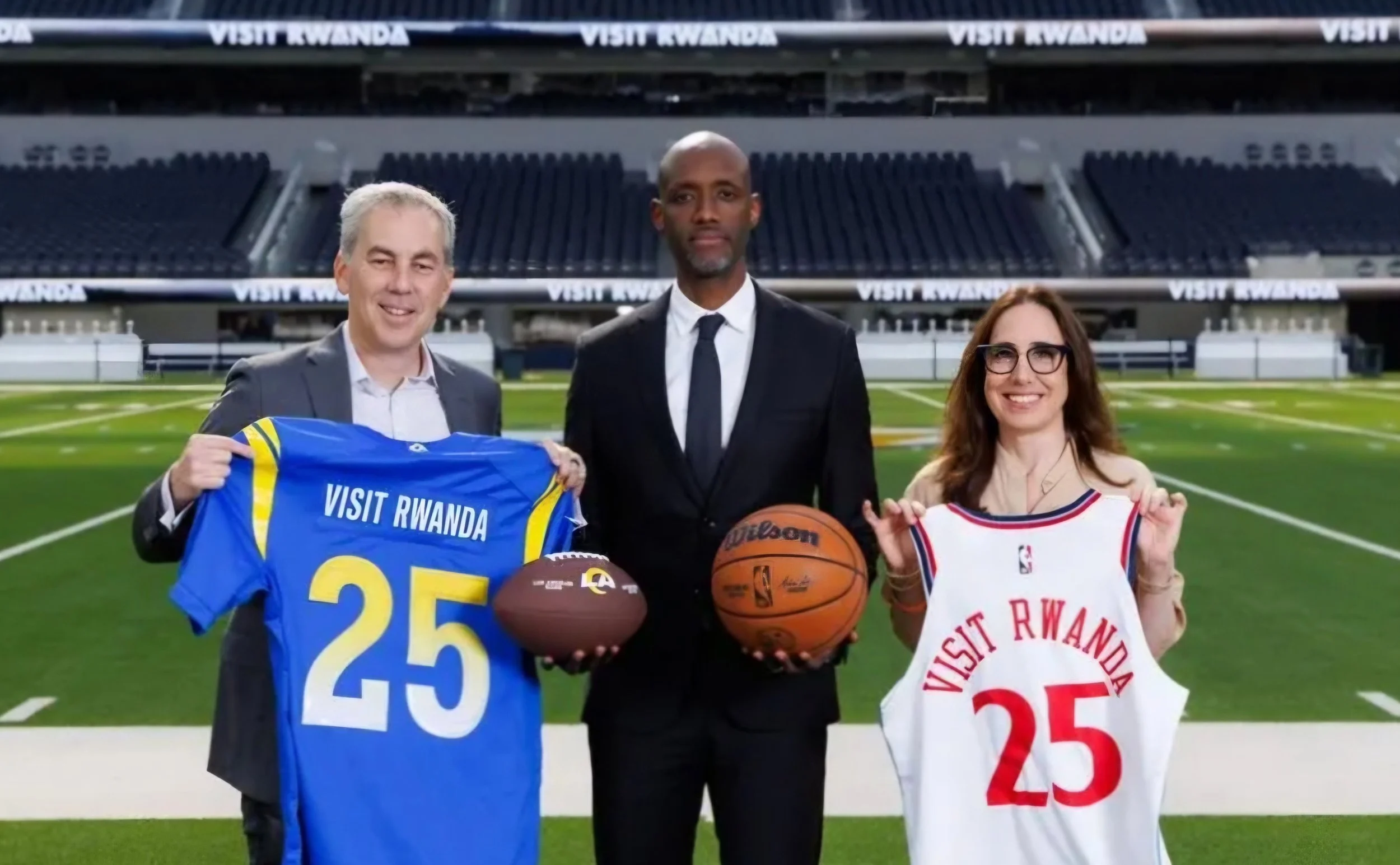
Visit Rwanda has crossed the Atlantic with two headline sponsorships in US sports.
🏀 The East African country brand is now the LA Clippers’ exclusive jersey-patch partner in the NBA, in a deal that also includes Intuit Dome rights and “coffee sponsor” status.
🏈 Visit Rwanda also signed on as an international tourism partner of the LA Rams in the NFL, with branding across SoFi Stadium and Hollywood Park.
These two new high-profile partnerships are a logical next step in a strategy Rwanda has been running for years with European football (Arsenal, PSG, Bayern) and the BAL in Kigali.
Rwanda is now stepping it up big time: the US sports machine offers unmatched reach, frequency, and conversion pathways in the world’s largest media market.
So what did Rwanda buy, exactly?
🔹NBA jersey patches are some of the most efficient global billboards in sport content. They appear in every highlight, every thumbnail, every jersey photo that circulates worldwide. “Visit Rwanda” will be in every shot.
🔹With the Rams, Rwanda plugs into the NFL’s L.A. complex through in-stadium signage, hospitality, and Hollywood Park activations. A powerful funnel to unlock business and high-net-worth tourism, especially from the diaspora.
🔹The Clippers package includes youth coaching exchanges and clinics tied to Rwanda - good for community optics and soft power.
With these deals, an African tourism board just bought top-tier US inventory, and not as a one-off Super Bowl ad, but as multi-year rights with athlete and arena integrations.
If this leads to strong tourism KPIs (US arrival growth, higher average daily spend and longer stays, new B2B opportunities, etc), this will act as a proof of concept for other African destination brands to follow suit.
📅 SAVE-THE-DATE: CREATION AFRICA FORUM IN LAGOS (Oct 16-18)
(c) MansA
In 2023, I had the honor of MC’ing the very first Creation Africa Forum in Paris. It was a strong debut, with 323 African guests representing 35 countries and the best of the continent’s creativity. President Macron even showed up.
This year, I’m back on stage as co-MC for the second edition of the Forum on October 16-18 at Federal Palace, alongside my friend David Adeleke.
What makes Creation Africa different from the sea of creative economy events is its sharp artistic curation by MansA (Maison des Mondes Africains). This means that we won’t just talk. Creation Africa is an experience - prepare to be wowed.
Backed by the French Ministries of Foreign Affairs and Culture, with support from AFD, Business France, Bpifrance and the Institut français, this second edition will bring together 50+ projects and 100 speakers from 40 countries across 🤖 immersive media (XR, games, AR, fashion innovation), transmedia publishing (webtoons), and cutting-edge audiovisual (TV series, VFX, sound design, animation).
The first two days are reserved for professionals, while October 18 is open to the general public.
If you’re in Lagos, you can’t miss this. Register here, and see you there!